Archive
Populating a drop-down with list values using C# for SharePoint 2010
- Finds the list “My Tasks”
- Gets all items from the “Title” column in the “My Task” lists
- Uses a foreach loop to add all of the “Title” columns values to a drop-down.
Watch the video to see how it works.


Moving repeating table values to another list using a Visual Web Part in C#
InfoPath 2010 repeating tables are useful and sometimes even essential to the project requirements. However, they carry with them some problems. For one thing when multiple values are entered into an InfoPath 2010 form all of the values become crammed into one SharePoint 2010 column. This will cause all kinds of problem down the road if you ever need to access that Info and/or filter it etc. So the following example shows how to move the repeating table values to a separate list where the values can be more efficiently managed.
- I’ve created a Visual Studio 2010 visual web part that fires the code on page load
- You must have a delimiter to separate the values. In this case I have used a ;
- Do NOT add a ; to the last repeating table entry. If you do you will have and extra record in the new list.

How does it work? View the Video below:

Chart Web Part SharePoint 2010
The SharePoint 2010 Chart Web Part is a very useful tool. It has lots of capablity out-of-the box. You can extract data from and Excel sheet and display that data via graphs on a SharePoint 2010 page. This videos shows you how.
Note: the Excel file must be uploaded to a SharePoint document library.

#Office2013 reaches RTM #ProjectServer # PS2013 #SharePoint # SP2013
   I am a Project Server and SharePoint consultant but my main focus currently is around Project Server.
I have been working with Project Server for nearly five years since 2007 for a Microsoft Gold Certified Partner in the UK, I have also been awared with the Microsoft Community Contributor Award 2011. I am also a certified Prince2 Practitioner. This article has been cross posted from pwmather.wordpress.com (original article) |
Quick post to highlight that Office 2013 has reached RTM! For more details see:
http://blogs.office.com/b/office-news/archive/2012/10/11/office-reaches-rtm.aspx


SharePoint 2010 install Problem, iPad BI, #ipad #sp2010
SharePoint 503 error
Working on a recent SharePoint 2010 install for a client, I came across a quite strange with the install.
As I had no direct access to the servers, I had to download all the Prerequisites, Binaries, Service Pack and latest CU and slipstream them all together to make a media set.
I ran the installers on both servers, got everything patched and working, opened the CA and Portal and site everything was fine, rebooted the servers and disaster !, nothing would work.
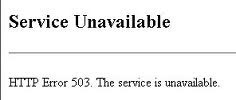
The CA site was giving 503 Service Unavailable error, checked in IIS manager and the CA and Token Service App pools were both stopped, so restarted them and reloaded the pages in IE, and WHAM 503 error again, checked in IIS and the app pools were stopped again.
Checked the SharePoint Windows Services and both the Timer and and Admin service were stopped, when trying to start all I got was the general windows message.
“The Service did not respond to the start or control request in a timely fashion”.
The window Application log was stuffed full of SharePoint Foundation errors, but none of them seemed to shed any light, after several hours of head scratching and rechecking I finally out the problem in the Windows security log. Each time I tried to start a service or app pool there was a login failure in the Windows security log for the Farm account with a
“Logon failure: the user has not been granted the requested logon type for this computer”
A quick check in the local computer security policy showed that none of the service accounts had the “Log on as a batch job” or “Log on as a service” right, after a quick word with the local domain admin it turned out that these rights were being overridden by Group Policy setting, after adding the accounts to a specific AD security group and rebooting the servers all was well again, a more full explanation is here
iPad BI issue
We have been working with a client getting the BI features running, one of the features introduced with the Dec 2011 CU for SharePoint was support for the iPad navigating a dashboard http://technet.microsoft.com/en-us/library/hh697482.aspx
The issue we found here is that for some iPads the navigation would work properly and not on others. Further investigation showed that the iPad having the problem was running iOS6 Safari browser, not 5, a nasty little gotch and tricky to spot.
Happy SharePointing.

#ProjectServer 2010 Bulk update project site issue #PS2010 #MSProject #SP2010 #SharePoint
|
I am a Project Server and SharePoint consultant but my main focus currently is around Project Server.
I have been working with Project Server for nearly five years since 2007 for a Microsoft Gold Certified Partner in the UK, I have also been awared with the Microsoft Community Contributor Award 2011. I am also a certified Prince2 Practitioner. This article has been cross posted from pwmather.wordpress.com (original article) |
I had a recent query from a colleague regarding the bulk update project site functionality in Project Server 2010. In this scenario my colleague had taken pre-configured databases from an environment at our offices and restored these 5 databases to the clients production environment. They then created some test projects / updated configuration etc. A test environment was also created for this client, part of this assignment was to rollover production to test, this included running the bulk update project sites functionality to update the test project sites. When looking at the list of previous site path web applications they could not see the clients web application in the list. All that was present were URLs from various test machines from the CPS environment, this can be seen below:
Bulk Update Project Sites:

Having seen this myself before but never had the opportunity to investigated it, I decided to look into the issue further.
Firstly I executed the MSP_Web_PWS_ReadProjectSiteBaseURLS stored procedure which I believe is called to populate the drop down menu above. This reads data from the MSP_Web_Applications table and MSP_Projects table.
Project Site Base URLs:

As you can see, the SQL output above matches the URLs displayed in the previous path drop down in the first screen shot. Notice 3 different URLs, these PWA databases have been linked to various PWA sites.
I then checked the WSTS Server UID for the project sites in the database, the test site server UID matched the http://vm662 server UID in the MSP_Web_Applications table:

I then checked the PWA site collection ID in the connect database:
PWA site ID:
ID: FAB47C15-A360-4AA8-9461-D3A9713200DD

So this all linked up as expected but with the incorrect URL, http://vm662 and not the clients server URL. http://vm662 was the VM that was used at the CPS office to create this clients initial config.
I believe the reason for this issue with the URL is that when using the 5 database restore process the PWA site is not recreated. The provisioning process just links to the existing PWA site collection in the restored content database. The URL doesn’t get updated in the MSP_Web_Applications tables as the site ID remains the same so Project Server doesn’t think there is a new URL. If you take only the 4 PWA databases and create a new PWA site, the URL is displayed correctly in the scenario described above. This is just a display issue, all functionality works correctly once the bulk update project site process has run.
Hopefully that will help to explain why you might be experiencing the same issue as seen / described above.


Combined Knowledge, DEV Boot Camps and the 70-573
It has been a few weeks since I attended, which has given me some time to reflect on the SharePoint 2010 development boot camp that myself and various others at CPS have attended over the last couple of months.

Now in my role as a SharePoint Consultant / Solution Architect, I primarily get involved in solution design, estimation of work and the leading of project teams during implementation.
In my experience however, clients rarely want to pay purely for oversight of implementation alone. As a result, my skill set extends to SharePoint configuration, client-side development (JavaScript, jQuery, XSLT, CSS, HTML etc.) SQL / reporting and very very occasionally I get involved in the .NET side of things also.
So to round out my knowledge, aid work estimation and my ideas for future 2013 concepts, I joined our developers on the Combined Knowledge – Development Boot Camp and I thought I would share my experiences (please note this is a personal thought piece and is not sponsored in anyway).

Setting the scene
We contacted Combined Knowledge and it would appear that these development boot camps are popular, so book early.
As a company, it is important for us to have our employees Microsoft certified to ensure quality solutions and our Gold Partner status in Project Server and SharePoint capabilities. As a result, we took the Boot Camp and 70-573 certification options for all staff members attending the course.
Cost of the training covers:
- Hotel for the week (board and all meals)
- Combined Knowledge training materials
- Microsoft official training manual for the course (used for night time reading and exam preparation)
- To kick off the Development Boot Camp piece, the trainer (Gary Yeoman in this case) sends study material suggestions for the night before the training, setting the tone for the week.

|
|
The Training
So now that we have set the scene, the training course side was the usual affair:
- Start time 9:30
- Finish time: 17:00 ish
- Virtual machine environment with SharePoint Server 2010, SQL Server, Visual Studio 2010 and various other tools as required
- Various refreshments throughout
- Click on the course overview for full course details.
- Full, detailed course notes of slides used and plenty of examples for anything you can think of for SharePoint development.
However, the development boot camp piece top and tails this with study in the evening based on MSDN documentation, course material and code examples to work through.
On each day at 8:30, Gary is in place ready to go through the study material and code samples for the evening before.
Certification and Community
If the moons align, you may also get the chance to join in with the SharePoint User Group community. Steven Smith supports the SUGUK for the Midlands and we were lucky enough to catch the meeting discussing SharePoint 2013. (Further details available here: http://suguk.org/)
And finally at the end of the course, the option to take the 70-573 – SharePoint 2010, Application Development exam is available at the Combined Knowledge offices, 10 minutes from the training location.
Thankfully, I managed to pass due to the excellent development course material and week full of studying.

And that concludes my review of the Combined Knowledge Dev Boot Camp experience, probably the best training experience I have had with knowledge that will serve me well now and for the future with SharePoint 2013.
If you have any questions, leave them in the comments below and I’ll come back to you.

SharePoint 2013 Technical Preview Development Environment
Just a straight copy from the original post here http://blogs.msdn.com/b/uksharepoint/archive/2012/10/05/sharepoint-2013-technical-preview-development-environment-dependencies-versions-downloads.aspx?utm_source=feedburner&utm_medium=feed&utm_campaign=Feed%3A+UkSharepoint+%28UK+SharePoint+Team+Blog%29
I have worked with various incarnations of pre-release software installed on development machines. Getting the right combination of tools and versions isn’t very straightforward. If you ever wondered which version of Windows Server 2012, Visual Studio 2012, Office Developer Tools and other Add-ons to install (and from where) read on.
Release Previews
- Windows Server 2012 Release Candidate
- Visual Studio Ultimate 2012 RC
- July 2012 update from Visual Studio 2012 Preview
- Microsoft SharePoint Developer Tools for Visual Studio 2012 Preview
- (if you don’t have Internet connection on your Development machine to install via the Web Platform Installer, here are direct links):
- Windows Identity Foundation SDK
- Windows Identity Extensions (**Make sure you have Windows Identity Foundation installed which is a Windows Server 2012 Feature**)
- SharePoint Client Components
- Workflow Tools 1.0 Beta for Visual Studio 2012
- Workflow Client 1.0 Beta
- Microsoft SharePoint Developer Tools for Visual Studio 2012 Preview Bundle
- Microsoft Visual Studio Tools for Office 2012 Design Time – Preview
- Microsoft Visual Studio Tools for Applications 2012 – Preview
- SharePoint 2013 Preview SDK
RTMs
- Windows Server 2012 RTM Trial
- Visual Studio 2012 RTM Trial
- Microsoft SharePoint Developer Tools for Visual Studio 2012 RTM
- (if you don’t have Internet connection on your Development machine to install via the Web platform Installer, here are direct links)
- Windows Identity Foundation SDK
- Windows Identity Extensions (**Make sure you have Windows Identity Foundation installed which is a Windows Server 2012 Feature**)
- SharePoint Client Components
- Workflow Tools 1.0 Beta for Visual Studio 2012
- Workflow Client 1.0 Beta
- Microsoft SharePoint Developer Tools for Visual Studio 2012 Preview Bundle
- Microsoft Visual Studio Tools for Office 2012 Design Time – Preview for RTM
- Microsoft Visual Studio Tools for Applications 2012 Preview for RTM
- SharePoint 2013 Preview SDK
Cloud 
- Sign Up for Office 365 Developer Preview Site and Install "Napa" Tools.
The obvious golden rule is not to mix RC and RTM versions of Windows Server, Visual Studio and SharePoint Developer Tools. Choose one and then stick to it. And please don’t underestimate the Cloud option. It is great if you want to try out the new Apps model and you are not that keen on setting up the Infrastructure, App domains or have enough HW to run VMs. Everything is set up for you in the cloud!

via Buzz Blog http://paulbuzzblog.wordpress.com/2012/10/08/sharepoint-2013-technical-preview-development-environment/
 Paul is a an expert SharePoint and Project Server developer and is responsible for designing and implementing custom solutions on client systems using the latest SharePoint and .NET technologies.
Paul has extensive experience with SharePoint systems across all sizes of implementation, ranging from small to large farms and has an excellent understanding of all the elements of SharePoint. This article has been cross posted from paulbuzzblog.wordpress.com (original article) |
#ProjectServer 2010 Resource assignments display issue #PS2010 #SP2010 #PS2013 #SP2013
|
I am a Project Server and SharePoint consultant but my main focus currently is around Project Server.
I have been working with Project Server for nearly five years since 2007 for a Microsoft Gold Certified Partner in the UK, I have also been awared with the Microsoft Community Contributor Award 2011. I am also a certified Prince2 Practitioner. This article has been cross posted from pwmather.wordpress.com (original article) |
Recently I was reminded of a minor issue that I thought I would share with you. While working with a client for a recent migration from Project Server 2007 to Project Server 2010, a query was raised regarding material resources and the resource assignment view in PWA. Material resources show a work and remaining work value with an hours ‘h’ label in 2010, in 2007 this displayed the material resource label. This is only a display issue, the underlying data is still correct in the Reporting database, so your reports will be correct. An example in PWA 2010 can be seen below:

I have a material resource named ‘material resource’ (sorry about the poor names used on my test system, I should really use some imagination!), I have assigned this material resource to two tasks, one task has 10 units and the other has 5 units. As you can see from the screen shot above, this displays 10h and 5h rather than 10 material resource and 5 material resource as you would have seen in 2007. Example shown below for PWA 2007:

As mentioned the Reporting data is still correct, see the example SQL output below:

The assignment work column correctly shows 0 and the assignment material work shows 10 and 5.
This is also an issue with the Project Server 2013 preview.
Just a minor display issue that I thought I would share in case anyone else came across this 


Practice makes Perfect Part 7 – Groups and Filters
 In my post Practice makes Perfect Part 3 – Views I explained how you can make your own view. In that post I promised to also show how you can make your own groups and filters. While I expect a lot of people find this easy or just use the default groups and filters it is still useful for beginners.
I will also take the time to go trough the default filters and groups and might be useful on a daily basis.
And again I will be using the preview version of Project Professional 2013 for this post. This is not the final product and changes may still occur. If you are curios about the new version of Microsoft Project go here and try it out for yourself.
So where can I find groups and filters?
There are actually two ways to use groups and filters in your project. When you are in you project select the view tab.


The other ways is in your Gantt Chart and go to Task Name and expand it (Dropdown). As you can see in the image below you are able to select Group By and Filters.

What groups and filters are there?
There are a lot of built in groups and filters. These are very useful to any Project Manager. Some good groups include: Auto scheduled v. Manually scheduled, Status, Milestones and Complete and Incomplete task. These groups are great way to get the information out of your project plan fast.
Some good filters include: Completed tasks, Critical, Incomplete tasks, Late tasks and Milestones. Like groups this is a great way to filter all the data in your project plan.
Using groups and filters is a timesaver when you are working with big project plans and you have to get to the data you want quickly.
How can I make my own Group?
Go to the view tab and select the groups. Expand it and select “New Group By”.

In the next screen you be able to make your group. In the image below I made a easy selection. I will group by milestone to see all the tasks that are milestones. In the order I selected descending to force tasks that are milestones to appear on top. I also have changed the cell background to light blue. Here you also have the ability to show the summary task where the milestones resides just to give you more information. As you can see you also have the ability to group the data by more then one field.

Grouping this way will give you this result.

As you can see this is a really easy way to group your data really quickly. Making this group took me about 1 minute. And if you are a Project Manager that 1 minute will properly save you 15 minutes if you would have to look for all the milestones in a big project plan. Next how to filter.
How can I make my own Filter?
Making your own filter on the same way you made a group. Go to the view tab and select the filter. Expand it and select “New filter” For this exercise I made a quick filter that filters on my own custom field Progress and show the tasks that equals the value Yellow. This basically filters my project plan on tasks that have a yellow smiley.

The image below show the outcome of the filter.

Using Groups and Filters is really easy and can save you a lot of time when working with big project plans. Both the group and filter have been made in about 1 minute.
I hope this post demonstrates how to make groups and filters and how easy it is. When working with big project plans and especially custom fields where you don’t have a filter or group for it is a must to know how to do this so you can access your data fast.
This is it for me. In the next post of Practice makes Perfect will be talking about Costs and Budgets in your project plan.

via SpeakingSilent » Robin Kruithof http://speakingsilent.wordpress.com/2012/09/20/practice-makes-perfect-part-7-groups-and-filters/
 I am Robin Kruithof. I am working at CXS in the Netherlands as a Microsoft Project Consultant. My passion lies in Project Management and everything in the Project Management domain.
This article has been cross posted from speakingsilent.wordpress.com/ (original article) |


 SharePoint (and Project Server) Shenanigans
You must be logged in to post a comment.